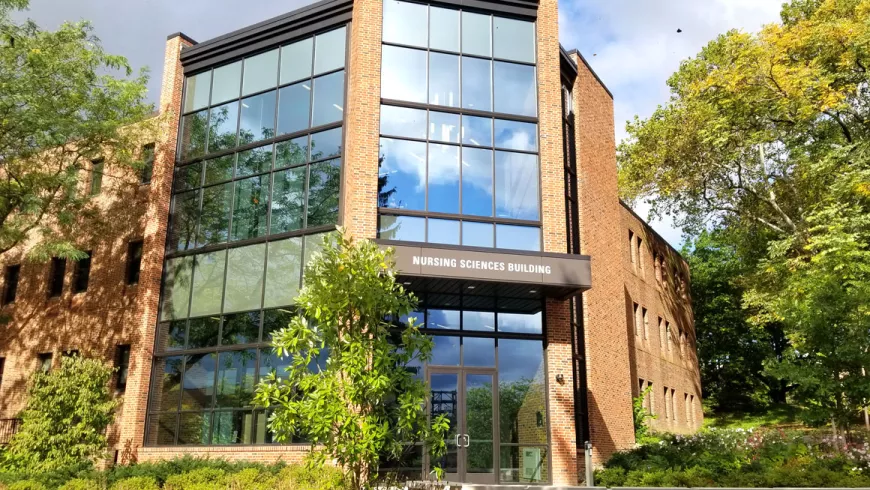
Clinical Experience
45 total clinical hours required
Application deadline
Credits and costs
Nationally Recognized
Gain Nursing Skills to Build a Lifelong Career
Lead change and positively affect the health care industry and patient safety.
Apply the art and science of nursing to health promotion and disease prevention in culturally diverse populations.
Provide therapeutic nursing care for infants, children, adults, and the elderly.
Use evidence-based practice and critical thinking to care for patients with acute and complex health problems.
Online BSN Degree Program Courses
Online BSN Degree Program Courses
The RN to BSN degree's core courses focus on contemporary issues in the field of nursing. Subjects of study include anatomy, chemistry, data management, ethics, health assessment, human development and family studies, human resources management, microbiology, nursing research, nutrition, and sociology.
Our nursing degree courses are online, and you can fulfill your clinical requirements near your home. Some nursing courses are available in an accelerated seven-week format.
The RN to BSN program is 120 credits. To earn this Bachelor of Science in Nursing, you must successfully complete:
- 42 prescribed core course credits
- 45 General Education credits
- 33 additional core credits (earned by portfolio verification for licensed RNs)
The degree's prescribed core courses focus on contemporary issues in the field of nursing. Subjects of study include anatomy, chemistry, data management, ethics, health assessment, human development and family studies, human resources management, microbiology, nursing research, nutrition, and sociology.
Program Requirements: 120 credits
You may transfer credits into this program from another accredited institution. However, to earn this Bachelor of Science in Nursing, you must earn 36 of the last 60 credits from Penn State.
General Education: 45 credits
(20–22 of these 45 credits are included in the requirements for the major.)
(See General Education in the curriculum.)
Requirements for the Major: 92–93 credits
(This includes 20–22 credits of General Education courses.)
Electives: 2–5 credits
Prescribed Courses (22 credits minimum)
- 3credits
Introduction to principles and methods of nursing research and application of, research evidence to practice.
- 3credits
Designed to extend the RN student's knowledge and skills in health assessment and physical examination across the lifespan.
- 3credits
An introduction to nursing informatics focusing on technology applications to the nursing profession.
- 3credits
Transition to baccalaureate education and professional nursing practice, emphasizing leadership, management, and issues influencing nursing education and practice.
- 4credits
Study of the concepts of family and community based nursing care emphasizing multicultural influences on health practices.
- 3credits
In-depth study and application of the theoretical principles and roles of adult clients and families with complex healthcare needs.
- 3credits
A project-based capstone clinical course for the RN student with a focus on the application of nursing concepts and the RN's development of future career goals. The course is designed to provide opportunity for students to synthesize and apply the art and science of nursing to health promotion and disease prevention in culturally diverse populations in varied clinical settings of the global community.
Portfolio Assessment (33 credits)
The following courses comprise credits earned by credit by portfolio assessment for RNs.
- 3credits
Designed to explore the illness component of health with emphasis on the pathophysiological and psychosocial aspects.
- 4credits
Introduction to the nursing process, clinical competencies and psychosocial skills.
- 2credits
Introduces the students to the profession of nursing, the science of nursing, and the use of information technology in health care.
- Prerequisite
BIOL 161 and BIOL 163
- 4credits
Therapeutic nursing care of the adult client in a variety of primarily medical-surgical settings.
- 3credits
Introduction to pharmacological concepts and identifies the pharmacodynamics of major classifications of drugs.
- Prerequisite
NURS 225 and NURS 230 or approval of the program.
- Recommended Corequisites
NURS 301 and NURS 310
- 3credits
Focuses on common health problems and nursing intervention for children and adolescents.
- Prerequisite
NURS 225 and NURS 230 and NURS 305
- 3credits
Nursing concerns and intervention in promoting the health of the older adult.
- 3credits
Therapeutic nursing care of the childbearing family and gynecological client.
- 4credits
In-depth study of care of patients with acute and complex health problems, utilizing evidence-based practice.
- Prerequisite
NURS 305 and NURS 350
- 4credits
Emphasizes clinical application of mental health theory in nursing care of patients with acute and chronic mental health problems.
Supporting Courses and Related Courses (select 6 credits)
- 3credits
Interdisciplinary discussion of violence and its perpetrators, victims, and impact on society as well as possible solutions for violence reduction.
- C or better
A student enrolled in this course must receive a grade of C or better.
- 3credits
This course covers the importance of environmental health on individual and community health, the effects of environmental hazards on diverse populations and the impact of climate change on disease.
- C or better
A student enrolled in this course must receive a grade of C or better.
- 3credits
Provides an introduction to the forensic health sciences, forensic nursing, and the nursing role in the scientific investigation of violence.
- Prerequisite
NURS 225, NURS 230, NURS 250
- C or better
A student enrolled in this course must receive a grade of C or better.
- 3credits
Examines nurses' role of recognizing patterns of injury. Evidence collection procedures are examined from collection to courtroom presentation, includes autopsy.
- Prerequisite or concurrent
NURS 245 and NURS 409
- C or better
A student enrolled in this course must receive a grade of C or better.
- 3credits
A seminar to discuss the current topics, trends, and research related to forensic nursing, including evidence-based research, public policy issues, media-related events, regulatory considerations, professional responsibilities, and career planning.
- Prerequisite or concurrent
NURS 410
- C or better
A student enrolled in this course must receive a grade of C or better.
- 3credits
Introduction to organizational theory and principles of practice in the administration of nursing services and patient care.
- C or better
A student enrolled in this course must receive a grade of C or better.
- 3credits
Analysis of information systems to manage nursing service organizations. Includes financial management, the budgeting processes, and productivity measurement.
- C or better
A student enrolled in this course must receive a grade of C or better.
- 3credits
Human resource management and related factors in nursing service organizations.
- C or better
A student enrolled in this course must receive a grade of C or better.
- 3credits
Focuses on the application of management principles in the role of the nurse manager.
- Prerequisite
NURS 430
- C or better
A student enrolled in this course must receive a grade of C or better.
- 3credits
Focuses on the impact of and the nursing care of persons experiencing acute trauma and/or critical illness.
- C or better
A student enrolled in this course must receive a grade of C or better.
- 3credits
A case-based collaboratory designed for the exploration and analysis of the ethical dilemmas facing health care informatics practitioners.
- C or better
A student enrolled in this course must receive a grade of C or better.
- 3credits
An exploration of clinical informatics tools to support informatics practice.
- Prerequisite
NURS 357
- C or better
A student enrolled in this course must receive a grade of C or better.
- 1–9credits
Designed to provide students with in-depth study and practice in clinical specialty area of choice. Students work with a faculty member in the development of course objectives and goals and with a clinical preceptor to accomplish them.
- 1–9credits
Creative projects, including research and design, which are supervised on an individual basis and which fall outside the scope of formal courses.
Courses Meeting General Education Requirements
- 4credits
Anatomy of a mammal, with special reference to that of man.
- GN
This course can be used to satisfy the Natural Sciences (GN) requirement.
- 3credits
Normal structure and function of the animal body, with special emphasis on human body systems.
- 3credits
Principles of communication, implemented through analysis and evaluation of messages, with some attention to formal speaking and group discussion.
- GWS
This course can be used to satisfy the Writing/Speaking (GWS) requirement.
- 3credits
Basic concepts and quantitative relations.
- GN
This course can be used to satisfy the Natural Sciences (GN) requirement.
- 1credit
Introduction to quantitative experimentation in chemistry.
- Prerequisite or Concurrent
CHEM 110 or CHEM 106
- 3credits
Instruction and practice in writing expository prose that shows sensitivity to audience and purpose.
- GWS
The credits earned in this course may be applied toward the Writing/Speaking (GWS) requirement.
- 3credits
Introduces students to the types of writing that social scientists typically do in the workplace, including research proposals, proper citation practices, literature reviews, and research reports.
- or:3credits
Instruction in writing persuasive arguments about significant issues in the humanities.
- GWS
This course can be used to satisfy the Writing/Speaking (GWS) requirement.
- or:3credits
Writing for students in scientific and technical disciplines.
- Prerequisite
ENGL 15, ESL 15, ENGL 30, and 4th Semester standing OR ENGL 137H, ENGL 138T, and 4th Semester standing
- GWS
This course can be used to satisfy the Writing/Speaking (GWS) requirement.
- or:3credits
Writing reports and other common forms of business communication.
- 3credits
Introduction to psychosocial and family development at all stages of the individual and family life cycle.
- GS
This course can be used to satisfy the Social and Behavioral Sciences (GS) requirement.
- 3credits
A survey course in microbiology for non-majors, this course focuses on the roles of microbes in human health and disease, agriculture, biotechnology, and other areas of societal impact.
- GN
This course can be used to satisfy the Natural Sciences (GN) requirement.
- 1credit
Selected techniques used to observe, identify, and count bacteria; effects of chemical and physical agents on microorganisms. The combination of MICRB 106 GN and 107 GN must be taken to receive General Education credit in biology.
- Prerequisite
MICRB 106
- GN
The credits earned in this course may be applied toward the Natural Sciences (GN) requirement.
- 3credits
The nutrients: food sources and physiological functions as related to human growth and well-being throughout life; current nutrition issues.
- GHW
This course can be used to satisfy the Health and Wellness (GHW) requirement.
- 3credits
Introduction to general psychology; principles of human behavior and their applications.
- GS
The credits earned in this course may be applied toward the Social and Behavioral Sciences (GS) requirement.
- 3credits
The nature and characteristics of human societies and social life.
- GS
This course can be used to satisfy the Social and Behavioral Sciences (GS) requirement.
- or:3credits
Current social problems such as economic, racial, and gender inequalities; social deviance and crime; population, environmental, energy, and health problems.
- GS
The credits earned in this course may be applied toward the Social and Behavioral Sciences (GS) requirement.
- 4credits
Descriptive Statistics, frequency distributions, probability and normal distributions, statistical inference, linear regression, and correlation.
- GQ
This course can be used to satisfy the Quantification (GQ) requirement.
General Education Requirements
Some General Education requirements may be satisfied by courses required for the major. Students should work with an adviser to select courses.
- Foundations: 15 credits
All courses require a grade of C or better. Inter-Domain courses may not be used for foundations requirements.- Writing/Speaking: 9 credits
- Quantification: 6 credits
3-6 credits are selected from mathematics, applied mathematics, and statistics; 3 credits may be selected from computer science or symbolic logic.
- Knowledge Domains: 15 credits
Inter-Domain courses may not be used for knowledge domain requirements.- Health and Wellness (GHW): 3 credits
- Natural Sciences (GN): 3 credits
- Arts (GA): 3 credits
- Humanities (GH): 3 credits
- Social and Behavioral Sciences (GS): 3 credits
- Integrative Studies: 6 credits
- Inter-Domain course work: 6 credits
- Exploration: 9 credits
- Natural Sciences (GN) (may be Inter-Domain): 3 credits
- GA, GH, GN, GS, and Inter-Domain courses: 6 credits
May include 3 credits of World Language course work beyond the requirements of the student’s degree program or at the 12th credit level, whichever is higher.
These General Education Requirements are for students who started in summer 2023 or later. Students who started earlier can review the prior version of the general education requirements.
Among the degree requirements, students should incorporate at least:
- 3 credits in U.S. cultures
- 3 credits in international (IL) cultures
- 3 credits in writing-across-the-curriculum courses
The course list includes only courses offered by World Campus. An official degree audit or the recommended academic plan for this program may include additional course options and detailed requirements. All students are expected to complete at least 36 Penn State credits to earn this degree. Please consult an academic adviser for details.
Course Availability
If you're ready to see when your courses will be offered, visit our public LionPATH course search (opens in new window) to start planning ahead.
Career Opportunities for Nursing Graduates

Career Opportunities for Nursing Graduates
As nursing becomes more complex, a Bachelor of Science in Nursing can help move your career forward. Our nursing bachelor’s degree program builds and expands on RN competencies to prepare you for more challenging — and possibly higher-paying — positions.
Job Titles Related to This Degree
This degree can open the door to positions you may not have considered before — in community agencies, rehabilitation centers, hospitals, nursing homes, home health agencies, hospices, schools, family planning centers, and business and industry.
Penn State RN to BSN graduates can choose from numerous nursing career opportunities and work in different areas of the health care industry. The following roles are often held by people with this type of degree:
- Emergency Department RN (Emergency Department Registered Nurse)
- Progressive Care Unit RN (Progressive Care Unit Registered Nurse)
- School Nurse
- Staff RN (Staff Registered Nurse)
Employment Outlook for Occupational Fields Related to This Degree
Estimates of employment growth and total employment are provided by the U.S. Bureau of Labor Statistics and are subject to change. While these occupations are often pursued by graduates with this degree, individual outcomes may vary depending on a variety of factors. Penn State World Campus cannot guarantee employment in a given occupation.
Registered Nurses
Career Services to Set You Up for Success

From the day you're accepted as a student, you can access resources and tools provided by Penn State World Campus Career Services to further your career. These resources are beneficial whether you're searching for a job or advancing in an established career.
- Opportunities to connect with employers
- Career counselor/coach support
- Occupation and salary information
- Internships
- Graduate school resources
Upcoming Events
Ready to Learn More?
Get the resources you need to make informed decisions about your education. Request information on this program and other programs of interest by completing this form.
Ready to take the next step toward your Penn State bachelor's degree?
Costs and Financial Aid
Costs and Financial Aid
Learn about this program's tuition, fees, scholarship opportunities, grants, payment options, and military benefits.
Costs and Financial Aid
Undergraduate Tuition
Undergraduate tuition is calculated based on the number of credits for which you register and the number of total credits you have accrued at or transferred to Penn State.
Tuition is due shortly after each semester begins and rates are assessed every semester of enrollment.
2025–26 Academic Year Rates
| How many credits do you plan to take per semester? | If you have 59 or fewer credits | If you have 60 or more credits |
|---|---|---|
| 11 or fewer | $638 per credit | $685 per credit |
| 12–19 | $7,755 per semester | $8,371 per semester |
Undergraduate students taking more than 19 credits will be charged the flat tuition rate plus the regular per credit hour rate for each credit above 19.
Financial Aid and Military Benefits
Some students may qualify for financial aid. Take the time to research financial aid, scholarships, and payment options as you prepare to apply. Federal financial aid may only be used to pay for credits used to satisfy program requirements.
Military service members, veterans, and their spouses or dependents should explore these potential military education benefits and financial aid opportunities, as well.
Additional Cost of Attendance Details
To view the detailed list of cost of attendance elements:
- visit the Tuition Information site
- click the plus sign to expand the table
- select a semester from the World Campus row
Earn a Valuable Credential along the Way

Earn a Valuable Credential along the Way
Enhance your professional credentials by earning one of our specialized certificates as you move from an RN to a BSN.
Some of the credits you earn in the certificate programs may be applied toward the requirements for your BSN degree. In addition, some courses in the certificate programs may apply toward graduate work or may satisfy continuing professional education requirements.
Choose from certificates in:
Learn to support the implementation and use of informatics tools in technology-rich health care environments. The curriculum in this online certificate program includes courses in electronic health records, clinical decision support tools, and other topics geared specifically for registered nurses who work directly with technology.
Learn more about the Undergraduate Certificate in Nursing InformaticsGain the tools you need to provide specialized services for victims and perpetrators of traumatic events. Learn about evidence collection and preservation; forensic documentation; the recognition of domestic violence, assault, and stalking; and legal and ethical issues.
Learn more about the Undergraduate Certificate in Nursing ForensicsWho Should Apply?
If you are currently licensed as a Registered Nurse (RN) with an associate degree or nursing diploma and you want to advance in your career, the online RN to BSN program can help you move up to a supervisory role or build a solid foundation to become a clinical nurse specialist, nurse anesthetist, nurse-midwife, or nurse practitioner.
National Recognition — CCNE Accredited
National Recognition — CCNE Accredited
The Penn State RN to BSN program is one of the top online programs in the nation, and the Penn State Ross and Carol Nese College of Nursing is approved by the Pennsylvania State Board of Nursing.
The baccalaureate degree program in nursing, master’s degree program in nursing, Doctor of Nursing Practice program, and post-graduate APRN certificate programs at The Pennsylvania State University are accredited by the Commission on Collegiate Nursing Education, 655 K Street NW, Suite 750, Washington, DC 20001, 202-887-6791. Further information can be found at www.ccneaccreditation.org.
The Ross and Carol Nese College of Nursing has been designated a Center of Excellence by the National League for Nursing in recognition of the college’s work creating and sustaining environments that promote the pedagogical expertise of the faculty.
A Reputation You Can Be Proud Of
Earning your BSN degree from Penn State World Campus can open doors to career mobility and advancement. The degree is a necessary stepping stone to advanced nursing practice, and the Penn State reputation is second to none.
Accelerated RN to BSN Format
Accelerated RN to BSN Format
You can choose to take some of your nursing courses at an accelerated pace for ultimate flexibility through our Accelerated RN to BSN format. You will receive the same quality instruction in a format that is compressed into seven-week sessions, allowing you to complete some of your nursing courses more quickly.
For ultimate flexibility in your program completion, the accelerated nursing courses can be taken in conjunction with our standard semester-length courses. And, if you live near a Penn State campus and wish to participate in both classroom and online learning, you can blend the two experiences while earning your degree.
Choose the most convenient format for you at a particular time — you won't have to quit your job or change your life to earn a high-quality undergraduate degree from Penn State's well-regarded Ross and Carol Nese College of Nursing.
Clinical Requirements
Clinical Requirements
The clinical requirement involves working with an individual within a community to gain professional experience, and it can be completed within or outside of a health care system.
RN to BSN Clinical Requirements
We are pleased to announce that we have recently significantly reduced our clinical hour requirement from 180 to 45 total program hours.
As an RN to BSN student in the Penn State Ross and Carol Nese College of Nursing, you will be required to complete a clinical experience in the final capstone course (NURS 475) to complement your course work. The clinical experience is designed by each student and will differ from those pre-licensure programs. The main goal of the experience is for you to grow professionally in order to take the next step in a successful career.
The clinical experience will provide you with an exciting opportunity to analyze and evaluate aspects of health care that are aligned with your career goals. Even for experienced nurses working in the field, the clinical requirements can provide valuable opportunities to train in new departments or move up to higher-level responsibilities.
The following course includes credits for your clinical experience:
| Course Number and Name | Clinical Description | Clinical Hours Required |
|---|---|---|
| NURS 475: Integrated Concepts in Nursing Practice | This clinical experience involves working with an individual within a community, and it can be completed within or outside of a health care system. Some of the clinical time/experience is also embedded in the course. (3 credits) | 45 clinical hours |
**Please note that a valid and current RN license is needed in order to enroll in the clinical course work.
Getting Started with a Clinical Experience
Your clinical experience will be a "health–related activity" and will include completing a project or spending time in a health care setting that will help you grow as a nursing professional. You will develop your goals and build an experience or project that will help you meet these individual goals. You will submit the plan for your health–related activity to your instructor for approval.
Examples of Appropriate Clinical Experiences
As you work closely with your adviser and your faculty to plan the path most appropriate for you, your individual clinical experience will be based on your own needs and goals. However, some possible clinical experiences to consider include:
- Complete a quality improvement observation and project.
- Create a teaching project for a vulnerable population.
- Prepare a "Brown Bag Medication Health Teaching" program at a senior center.
- Collaborate with an agency to identify, investigate, develop, implement, and evaluate a pilot evidence-based practice (EBP) project following a specific EBP model.
- Develop, implement, and evaluate a comprehensive weight-management program, presented biweekly during the semester, with adults living in an assisted living apartment complex.
- Collaborate with a school nurse to develop, implement, and evaluate a health education fair at a local school.
- Develop a heart-healthy education program to be implemented in K–6 physical education classes in elementary schools.
- Perform blood pressure screening and assessment of clients at a homeless shelter.
- Follow an administrator of a nonprofit, for-profit, or public agency and develop an intervention or project based on what you have learned.
- Work with case management at an insurance company.
- Investigate allocation and/or utilization of health care resources in a geographical setting. Plan and implement a program based on this information.
- Join and then lead a support group — review group dynamics and current research on topic.
- Examine program planning at agencies — e.g., the Red Cross — and learn what is involved in planning for blood donation drives.
- Gain clinical experience in a specialty area of your choice.
Set Your Own Pace

Set Your Own Pace
Whether you are looking to finish your program as quickly as possible or balance your studies with your busy life, Penn State World Campus can help you achieve your education goals. Many students take one or two courses per semester.
Our online courses typically follow a 12- to 15-week semester cycle, and there are three semesters per year (spring, summer, and fall). If you plan to take a heavy course load, you should expect your course work to be your primary focus and discuss your schedule with your academic adviser.
To Finish Your Degree in Two to Three Years
Take 6 courses each semester
To Finish Your Degree in Three to Four Years
Take 4–5 courses each semester
To Finish Your Degree in Five or More Years
Take 2–3 courses each semester
A Trusted Leader in Online Education

Penn State has a history of more than 100 years of distance education, and World Campus has been a leader in online learning for more than two decades. Our online learning environment offers the same quality education that our students experience on campus.
Convenient Online Format
This program's convenient online format gives you the flexibility you need to study around your busy schedule. You can skip the lengthy commute without sacrificing the quality of your education and prepare yourself for more rewarding career opportunities without leaving your home.
How to Apply to Penn State

How to Apply to Penn State
Apply by October 31 to start January 12
Application Instructions
Deadlines and Important Dates
Complete your application and submit all required materials by the appropriate deadline. Your deadline will depend on the semester you plan to start your courses.
Spring Deadline
Apply by October 31 to start January 12Summer Deadline
Apply by March 15 to start May 18Fall Deadline
Apply by June 30, 2026, to start August 24, 2026
Steps to Apply
To apply for this program, you must be a high school graduate or have completed your GED.
Licensure
All RN to BSN applicants must have completed an RN program or have an RN license to practice in the United States. Prior to enrollment in certain courses, all RN to BSN students must have an active RN license in the state in which course work with clinical hours is completed.
Internationally educated students that already have an RN license to practice in the United States are welcome to apply.
Applications are submitted electronically and include a nonrefundable application fee. You will need the following items to complete your application:
High school transcripts or GED transcript. First-year applicants are required to submit Self-Reported Academic Records (SRAR). Official high school transcripts will only be required at the time a student accepts an offer of admission to Penn State.
Official college or university transcripts, if you attended another institution, and/or official military transcripts (if applicable). (All college or university transcripts are required regardless of the length of time that has passed, the grades earned, or the accreditation of the institutions attended. Acceptance of transfer credit toward your degree is subject to final approval by the academic department. For detailed information, see the Transfer Students page.)
Transcripts not in English must be accompanied by a certified translation. Please send your transcripts by mail or electronically through Parchment, eScrip-Safe, or the National Student Clearinghouse directly to Penn State from the college/university where coursework was attempted.
Submit official documents by mail to:
Undergraduate Admissions Office
The Pennsylvania State University
201 Shields Building
University Park PA 16802English Proficiency. The language of instruction at Penn State is English. With some exceptions, international applicants must take and submit scores for the Test of English as a Foreign Language (TOEFL) or International English Language Testing System (IELTS). Minimum test scores and exceptions are found in the English Language Proficiency section on the Undergraduate Admissions International Requirements page. Visit the TOEFL website for testing information. Penn State's institutional code is 2660.
New students are encouraged to complete the FAFSA by March 1. Please visit the Office of Student Aid website for more information about applying for financial aid and recommended deadlines.
To begin the online application, you will need a Penn State account.
Create a New Penn State Account
If you have any problems during this process, contact an admissions counselor at [email protected].
Please note: Former Penn State students may not need to complete the admissions application or create a new Penn State account. Please visit our Returning Students page for instructions.
Accessing MyPennState
The MyPennState Portal provides access to our online admissions services. Before accessing MyPennState, you must have a Penn State account that will be used to access all Penn State systems. After creating an account, you will receive a unique Penn State User ID. You will need to enter your User ID followed by @psu.edu when signing in to MyPennState and other Penn State sites. For example, you should be entering something like '[email protected]' in the Sign In field.
The application consists of six sections:
- Application Setup
- Program of Study
- Citizenship and Residency
- Academics and Experience
- Miscellaneous
- Review and Submit
Application Setup
Be sure to select "Online" for the "How would you like to complete your degree" question if you plan to attend Penn State World Campus.
The rest of this section will ask some basic questions about your education experience and military affiliation.
Program of Study
You will choose the degree type and then the starting semester.
Your starting campus will be selected as Penn State World Campus by default as long as you picked "Online" in your Application Setup. Click Continue.
On the Choose a Program page, select your intended major from the list.
Review your selection on the summary screen and click Continue to move on to the Citizenship and Residency section.
Citizenship and Residency
Complete the series of questions about your citizenship status, demographic information, Pennsylvania residency status, and family history.
Academics and Experience
You will need to enter academic experience information about your high school and any attempted courses at a college or university after high school.
The Education Gap Statement offers a place to explain any time that has elapsed between your high school graduation and your anticipated enrollment at Penn State. Please provide a summary of why that gap occurred. Some examples that would explain a gap in your education include work, family, attending another college or university, etc.
Miscellaneous
In the Miscellaneous section, you will provide any program-specific requirements (e.g., a personal statement), information about activities, and financial aid information.
Review and Submit
Review your information, digitally sign your application, and provide payment for the application fee ($65 domestic or $75 international).
High School Transcripts and Academic Record
After your application is completed, you will also need to self-report your high school course work before the application deadline. You will be directed to fill out the Self-Reported Academic Record (SRAR). It is helpful to have a high school transcript available when completing this section. In the third section, you'll select your program of study and campus.
Official high school transcripts or GED transcript, along with records from high school, are required, regardless of the length of time that has passed.
Include any college/university transcripts (required), military transcripts, and Proof of English Language proficiency (if applicable). SAT/ACT scores are not required if you are identified as an adult learner or transfer student.
All official documents should be sent to:
Undergraduate Admissions Office
The Pennsylvania State University
201 Shields Building
University Park, PA 16802You can also have your transcripts sent electronically through Parchment, eScript-Safe, or the National Clearinghouse directly to Penn State from the college/university where course work was attempted.
Acceptance
After receiving your application, application fee, and all required materials, your application will be evaluated for admission. You can check your application status online. This will provide the most up‐to‐date information about the status of your application and is updated once daily, before 8:00 a.m. (ET). Once a decision has been made regarding your application, it will be available to you through the MyPennState portal.
For information on when you can expect an admissions decision, visit the Dates and Deadlines page of the Undergraduate Admissions website. Make sure you click the "+" sign to see these dates for World Campus Applicants (First-Year and Transfer).
5. Complete the application.
Admissions Help
If you have questions about the admissions process, contact an admissions counselor at [email protected].
Contact Us

Contact Us
Have questions or want more information? We're happy to talk.
World Campus Admissions Counselors
Phone: 814-863-5386
[email protected]
To learn more about the highly respected nursing programs, visit The Penn State Ross and Carol Nese College of Nursing website.
Learn from the Best
Learn from the Best
The BSN is offered by Penn State World Campus in partnership with the Penn State Ross and Carol Nese College of Nursing. Our courses are taught by distinguished faculty who have special training and experience teaching in an online environment.
Faculty
Stephanie Barrett, RN, ONC
- DegreeMSN, University of Hartford
- DegreeBSN, University of Connecticut
Stephanie Barrett instructs students in NURS 440: Trauma/Critical Care. An experienced critical care and trauma nurse, she is also a nurse educator in a large academic medical center.
Patricia Conroy, RN
- DegreeMSN, Bloomsburg University
- DegreeBSN, Alfred University
- DegreeDiploma in Nursing, Allentown Hospital School of Nursing
Patricia Conroy is a clinical nurse specialist with more than 11 years of experience in the pharmaceutical industry, along with extensive broad-based clinical nursing experience. In addition to her experience teaching nursing students who are candidates for the bachelor's degree, she has expertise in grassroots advocacy development and coalition-building, with a background in managed care, disease management, development and refining of clinical guidelines, and outcomes assessment. She also has extensive experience in program development. She has received national recognition for her work in osteoporosis and postmenopausal women's health education.
Elizabeth Cutezo, CNE
- DegreeMSN, Penn State
- DegreeBSN, Penn State
Elizabeth Cutezo, an assistant teaching professor in the Ross and Carol Nese College of Nursing at Penn State, has supervisory experience in nursing homes and work experience in the nursing areas of medical-surgical, intensive care, school nursing, and home health nursing. Her educational focus is on family and community, diversity, epidemiology, veteran care, disaster preparedness, and technology use in community settings and in simulation laboratories.
Michael Evans
- DegreeDNP, Penn State
- DegreeM.S. in Ed., Capella University
- DegreeMSN, Misericordia University
- DegreeBSN, Penn State
- DegreeA.S.N., Penn State
Dr. Michael Evans, assistant dean of undergraduate nursing education at Penn State campuses and associate teaching professor of nursing, teaches in the BSN, RN to BSN, and graduate-level programs (DNP). His research interests center around palliative and end-of-life care and improving the quality of life for persons living with chronic progressive illnesses.
Lisa Firestine, RN
- DegreeMSN, Indiana University
- DegreeBSN, University of Michigan
Lisa Firestine has been a nursing instructor with Penn State World Campus since 2008. Prior to joining World Campus, she taught in a traditional classroom at Penn State University Park, as well as at Purdue University. She has taught courses in medical-surgical nursing, health assessment, nursing ethics, informatics, nursing research, and leadership. She has also developed several electives in such areas as medical-surgical nursing, critical care nursing, and health assessment. Her thesis focused on the relationship between perceived threat, coping, and coping effectiveness of individuals with coronary artery disease. She has also published in the area of psychosocial issues in cardiac patients.
Abby Hackenberger, RN
DegreeMSN, Nursing Education, Penn StateAbby Hackenberger has been a certified critical care RN for more than a decade, and this is where her passion lies. She has taught clinically and in the hospital setting, all in critical care for the past several years.
M. Ellen Hollars
- DegreeMSN, Penn State
- DegreeBSN, Penn State
M. Ellen Hollars provides instruction for Penn State World Campus nursing management certificate courses and independent study courses, teaches part-time as a clinical instructor for undergraduate nursing students, and serves as the COO of VNA Health System. Her research and practice interests include community health, home health and hospice, person-centered care, care collaboration, geriatric outcomes, and models of care delivery for home health. She has served community organizations in both a leadership and volunteer capacity, and she is passionate about teaching and helping new RNs and RNs pursuing their BSN degrees to be the best nurses that they can possibly be.
Suzanne Kuhn, RN, CNE
- DegreeDNP, Duquesne University
- DegreeMSN, Indiana University of Pennsylvania
- DegreeBSN, St. Francis University
Dr. Suzanne Kuhn is the campus coordinator for nursing programs at Penn State Altoona. She has been a nurse educator for more than 25 years in a variety of areas, including pediatrics, medical-surgical nursing, fundamentals, professional role development, dying and death, and ethics. Her research interests include end-of life-issues, bereavement following the death of a child, health promotion and education, and companion animals.
Delores McCreary
- DegreeDNP, Penn State
- DegreeMSN, Penn State
- DegreeBSN, Penn State
Dr. Delores McCreary is an associate teaching professor of nursing who has taught a wide array of nursing classes. Community health and leadership are her primary areas of expertise.
Nickolaus Miehl
- DegreePh.D., Nursing and Health Innovation, Arizona State University
- DegreePost-MSN Certificate, Nursing Education, Clarion University
- DegreeMSN, Forensic Nursing, Duquesne University
- DegreeBSN, Nursing, Gannon University
Dr. Nickolaus Miehl teaches in the forensic nursing certificate program. His research interests include clinical leadership and innovation in complex health care delivery systems.
Melissa Miner, RN, CNE
- DegreeDNP, Waynesburg University
- DegreeMSN, Duquesne University
- DegreeBSN, Penn State
Dr. Melissa Miner has taught nursing to students in the diploma, associate degree, RN to BSN, and BSN programs for nearly three decades. Her background in teaching and research primarily focuses on adult medical-surgical disorders. Dr. Miner also has teaching and research interests in evidence-based practice as it relates to research, health assessment, and community settings (i.e., hospice). She is interested in reading about new topics, such as genomics and transitional care as it relates to nursing practice.
Mary Alyce Nelson
- DegreeDNP, Penn State
- DegreeMSN, Bloomsburg University
- DegreeBSN, Villa Maria College
Dr. Mary Alyce Nelson is the coordinator of the Penn State World Campus RN to BSN program and an assistant professor/undergraduate nursing coordinator at Penn State University Park. She has held various administrative roles in inpatient, outpatient, and educational settings, and her areas of expertise are mental health and health care leadership. Her research area of interest is alternative models of mental health treatment in rural outpatient clinics.
Janet Ritenour, RN
DegreeMSN, West Virginia UniversityJanet Ritenour has focused on primary maternity nursing, and she is a certified hypnotherapist and aromatherapy practitioner. Her areas of expertise are women's health, alternative health, research, dying and death, and forensic nursing.
Joyce Taylor
- DegreePh.D., Education, Specialization Nursing Education, Capella University
- DegreeMSN, Nursing Education, Indiana Wesleyan University
- DegreeBSN, Penn State
Dr. Joyce Taylor is an associate teaching professor in nursing. Her teaching and research involve academic progression in nursing education. She has more than 30 years of combined clinical and teaching experience in nursing, working in various health care institutions, with a primary focus in critical-care and trauma. Dr. Taylor teaches across the nursing curriculum in both online and face-to-face courses. She is involved in the RN to BSN program.
Brenda Terry-Manchester
DegreeMSN, Misericordia UniversityBrenda Terry-Manchester's research interests include qualitative analysis and holistic perspectives of nurses. Her teaching experience includes a broad range of leadership/management topics as well as management of patients with complex/critical care needs.
Rebecca D. Toothaker
- DegreePh.D., Philosophy of Nursing, University of Phoenix
- DegreeMSN, Nursing Education, University of Phoenix
- DegreeBSN, Kutztown University
- DegreeDiploma, Nursing, Reading Hospital School of Nursing
Dr. Rebecca D. Toothaker, adjunct faculty member of nursing, focuses her research on generational learners and success nursing education completion rates. She teaches courses in nursing, health assessment, and nursing research.
Beth Ann White, DNP, CRNP-BC, RN
- DegreeDNP, Penn State
- DegreeM.S. and Adult Nurse Practitioner, Penn State
- DegreeB.S., Nursing, Penn State
- DegreeRN, Diploma, Geisinger School of Nursing
Dr. Beth Ann White is the coordinator for the FNP program and is an associate teaching professor in the College of Nursing. She has worked as a case manager, disease manager, and regional manager for the Medical Home project, along with her continued practice as an adult nurse practitioner. Her research interest includes improved oral care in long-term care.
News